In collaboration with: NSS Unit, Don Bosco College, Golaghat
Date: 9 October 2026.
Venue: Don Bosco College, Golaghat
Occasion: World Mental Health Day 2026
Theme of the Competition
The Inter-Departmental Speech Competition was organised around the following interconnected themes:
Youth Voices, Social Change: Our Experiences, Our Responsibility
From Silence to Voice: How Speaking Up Creates Social Change
Hear Me, Understand Me, Change the World: The Power of Lived Experience
Introduction
On the occasion of World Mental Health Day 2026, the Department of Sociology and the Department of Education, in collaboration with the NSS Unit of Don Bosco College, Golaghat, organised an Inter-Departmental Speech Competition on 9 October 2026. The programme aimed to create awareness about mental health, encourage young people to express their lived experiences, and highlight the importance of communication, empathy, understanding and collective responsibility in creating a supportive society.
The programme provided a meaningful platform for students to speak openly on issues connected with mental health and social change. The themes encouraged participants to move beyond silence and stigma and to recognise the importance of listening to and respecting individual experiences. The competition also reflected the broader objective of World Mental Health Day by emphasising that mental health is not merely an individual concern but also a social issue requiring collective awareness and responsibility.
Participation
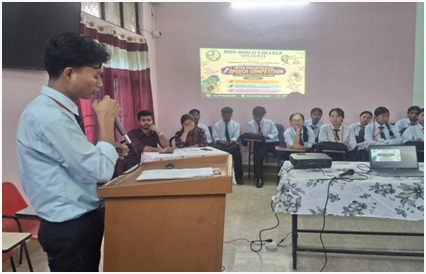
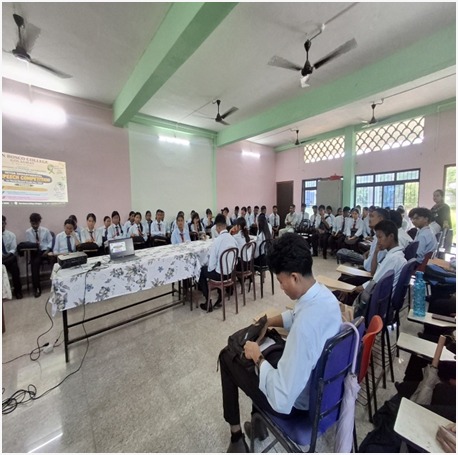
A total of eight students participated in the speech competition. Students representing four academic departments of the college took part in the event:
Department of English
Department of Sociology
Department of Political Science
Department of Commerce
The participation of students from different academic disciplines made the programme genuinely inter-departmental and encouraged the exchange of diverse perspectives on mental health, lived experiences, youth responsibility and social transformation.
Conduct of the Competition
The participants delivered speeches based on the themes provided for the competition. Through their presentations, students addressed various dimensions of mental health and social life, including the importance of speaking up, overcoming silence and stigma, sharing personal experiences, listening to others, developing empathy, and taking responsibility for creating positive social change.
The competition encouraged students to use their own understanding and experiences to communicate meaningful social messages. The participants demonstrated confidence, creativity, awareness and the ability to connect individual experiences with wider social concerns.
The event also reinforced the idea that young people can become important agents of social change when they are provided with opportunities to express their concerns and experiences. By encouraging dialogue and active listening, such initiatives can contribute towards creating a more understanding and supportive educational environment.
Evaluation and Judging
The competition was judged by two distinguished faculty members:
Dr. Piyali Dutta, Department of Political Science
Mr. Gaurav Dey, Department of Commerce
The judges evaluated the participants on the basis of their understanding of the topic, relevance and quality of content, clarity of expression, confidence, communication skills, originality and overall presentation.
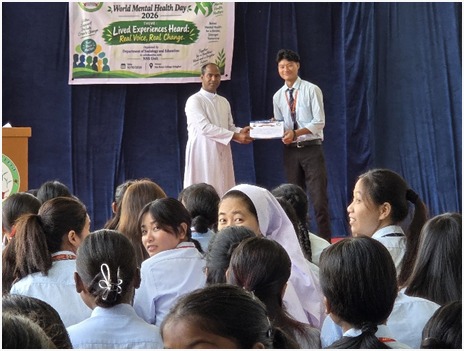
The winners of the Inter-Departmental Speech Competition were:
Position | Name of Student | Semester | Department |
1st Position | Savio Surin | 7th Semester | Political Science |
2nd Position | Mahima Ekka | 1st Semester | Sociology |
3rd Position | SanngamWangjen | 7th Semester | Political Science |
The winners were recognised for their effective presentation, meaningful engagement with the themes and ability to communicate their ideas with clarity and confidence.
Significance of the Programme
The Inter-Departmental Speech Competition was significant in several ways. First, it created an opportunity for students to discuss mental health in an open and constructive environment. Second, it encouraged students to recognise the importance of speaking about their experiences rather than remaining silent because of fear, stigma or social pressure.
The programme also highlighted the relationship between individual experiences and social change. When personal experiences are heard and understood, they can contribute to greater awareness and encourage communities and institutions to respond more sensitively to social and mental health concerns.
Furthermore, the programme strengthened the role of the college as a space for dialogue, inclusion and social awareness. The involvement of the NSS Unit added a community-oriented dimension to the programme, reinforcing the values of social responsibility, empathy and active citizenship among students.
Outcome of the competition
The programme successfully provided students with a platform to express their views and engage with the important issue of mental health. The participation of students from different departments demonstrated their interest in contemporary social issues and their willingness to engage in meaningful public discourse.
The competition also helped develop students’ public speaking, critical thinking, and communication and presentation skills. More importantly, it encouraged a culture in which students can listen to one another, acknowledge lived experiences and understand that seeking help or speaking about difficulties is a sign of awareness and courage rather than weakness.
Conclusion
The Inter-Departmental Speech Competition organised on the occasion of World Mental Health Day 2026 was a meaningful and successful initiative of Don Bosco College, Golaghat. Organised by the Departments of Sociology and Education in collaboration with the NSS Unit, the programme successfully brought together students from different disciplines around the common concerns of mental health, lived experience and social responsibility.
The central message of the programme was that every voice matters and every lived experience deserves to be heard and understood. By creating opportunities for young people to speak, listen and engage with one another, educational institutions can contribute significantly to building a more empathetic, inclusive and mentally healthy society.
The programme concluded with appreciation for all the participants, the judges, the organising departments and the NSS Unit for their valuable contribution towards making the event meaningful and successful.